
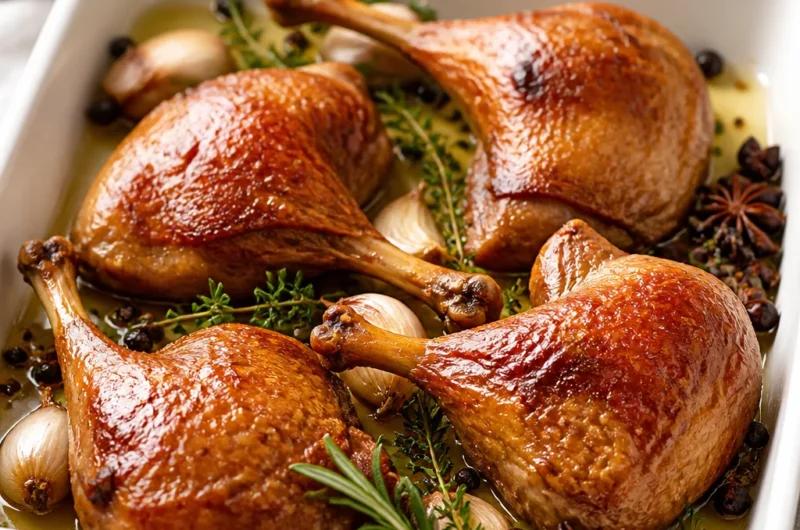
Traditional French Duck Confit Recipe is what I make when I want something cozy and impressive, but I do not want to hover over the stove all night. Maybe you have had duck in a restaurant and thought, “Yeah, that is delicious, but I am not doing that at home.” I get it. Duck sounds fancy. But this is one of those classic dishes that is actually very forgiving if you take it step by step. And the payoff is huge: tender meat, crisp skin, and a rich, savory vibe that makes regular chicken feel a little jealous. 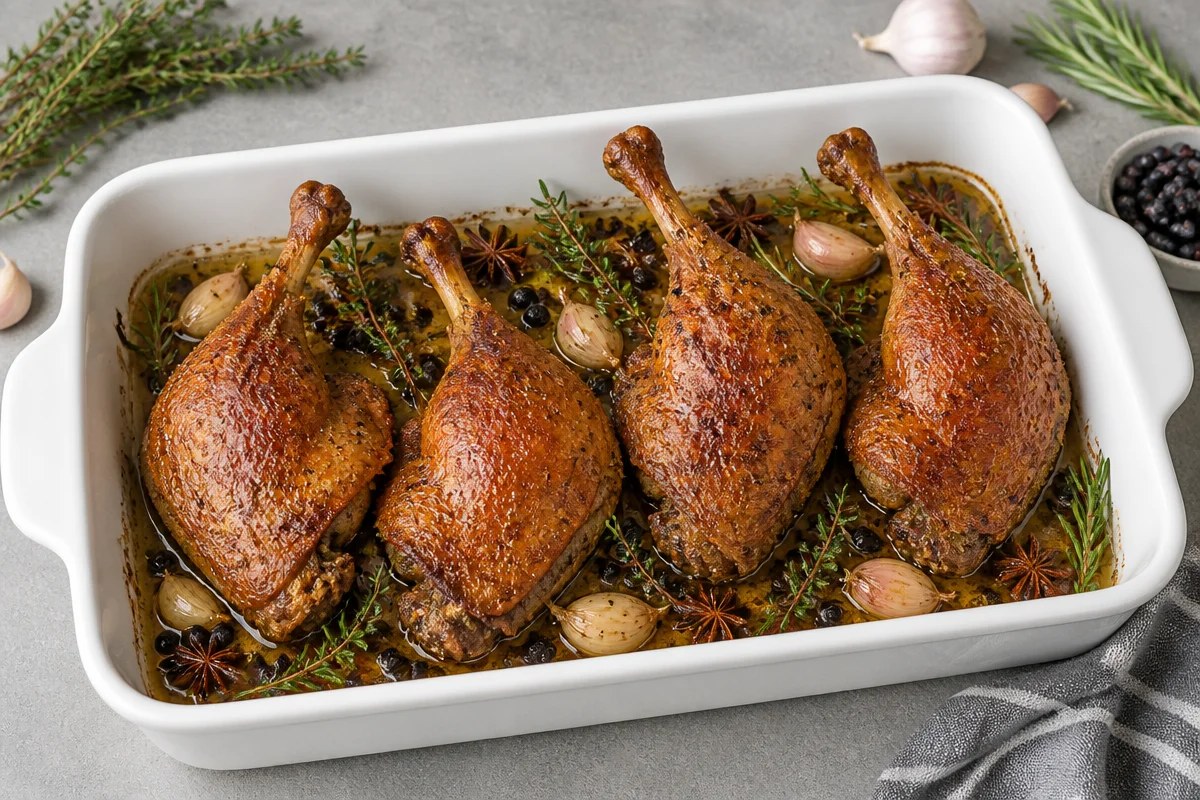
What Duck Confit tastes like
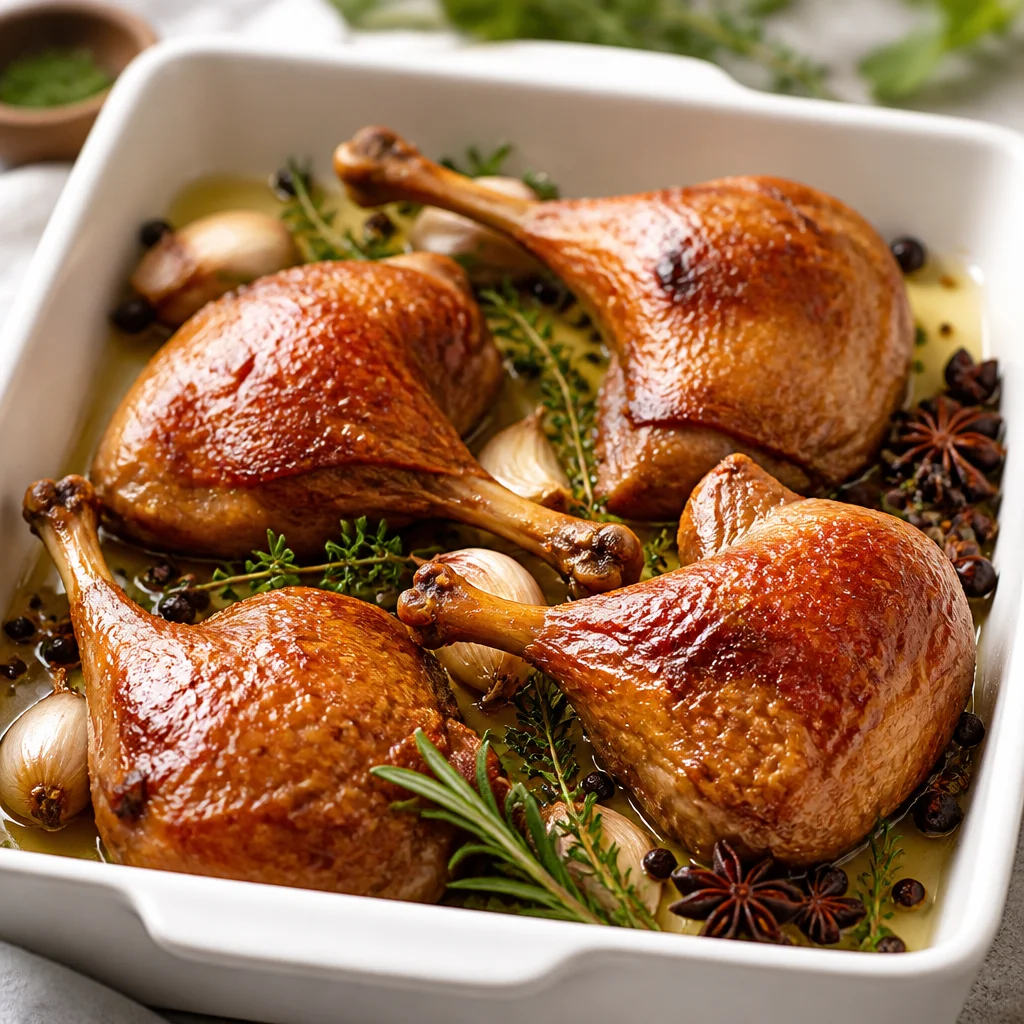
Duck confit tastes rich, deeply savory, and kind of luxuriously simple. The meat is tender and silky, not dry, and it pulls away from the bone with barely any effort. The skin can be crisped up at the end, and that contrast is honestly the whole reason I keep making this.
Flavor wise, it is not “gamey” in a scary way. It is more like dark meat chicken turned up a notch, with a fuller, rounder taste. If you season it well, you will notice the gentle punch of garlic, the warmth of thyme, and that salty, comforting depth that makes you want one more bite even when you are full.
I love serving it with something that soaks up the duck fat goodness, like roasted potatoes or crusty bread. And yes, the fat is part of the magic, so do not be shy about enjoying it.
“I thought duck confit was restaurant only food. I followed these steps and my kitchen smelled amazing, and the duck came out unbelievably tender. The crisp skin step at the end made it feel like a real French bistro night.”
What does confit mean?
Confit is a French cooking method where food is cooked slowly in fat and preserved in that fat. Historically, it was a way to keep meat for longer before refrigerators were a thing. These days, we do it because it tastes incredible.
For duck, the idea is simple: you salt the duck first, then cook it low and slow in duck fat until it turns meltingly tender. After that, you can store the pieces covered in fat, and they keep well in the fridge. It is actually a pretty practical meal prep situation if you like having “future you” gifts waiting.
Also, if you are curious about who is behind this blog and why I am always talking about French comfort food, you can peek at my little story here: about this blog. It will make my duck obsession make a bit more sense.
Duck cut used for Duck Confit
The most common cut for duck confit is duck legs, meaning the whole leg with the thigh and drumstick attached. This is what you want because leg meat stays juicy and becomes super tender with slow cooking. Duck breast is delicious, but it is better cooked differently, usually like a quick pan sear.
Here is what I recommend buying:
- Duck legs, ideally bone in and skin on
- Look for similar size pieces so they cook evenly
- If you see “Moulard” duck legs, those are great for confit
If you can only find separated thighs and drumsticks, you can still do it. Just keep an eye on them since smaller pieces can cook a bit faster.
One more thing: do not trim off the skin. The skin protects the meat and later becomes your crispy, golden reward.
Duck fat to cook Duck Confit
Duck fat is non negotiable for the classic vibe. It is what makes a Traditional French Duck Confit Recipe taste like it came from a tiny countryside kitchen. The good news is you do not always need a mountain of it. You just need enough so the duck is mostly submerged during cooking.
Where to get duck fat:
Store bought duck fat is common now, especially in nicer grocery stores. It is usually in a jar. If you have a local butcher, ask them too. Sometimes they have it frozen.
If you buy duck legs that have extra skin or fat attached, do not toss it. You can render it by chopping it up, putting it in a small pot with a splash of water, and letting it cook low until the fat melts out. Strain it and you have homemade duck fat. It feels weirdly satisfying.
How much duck fat do you need? It depends on your pot. A smaller snug pot needs less. A wide pot needs more. I aim to nestle the legs in a single layer and pour fat until they are covered, or almost covered. If the very top peeks out a little, it is usually fine as long as you keep the temperature gentle and the fat is hot enough to cook evenly.
And a practical note: save that fat afterward. Strain it, chill it, and use it for potatoes, carrots, or even frying eggs. It is pure flavor.
How to make Duck Confit
This is the part where people expect a complicated chef lecture, but I promise it is mostly waiting. The steps are simple: salt, rest, slow cook, then crisp. If you can plan ahead even a little, this Traditional French Duck Confit Recipe becomes almost effortless.
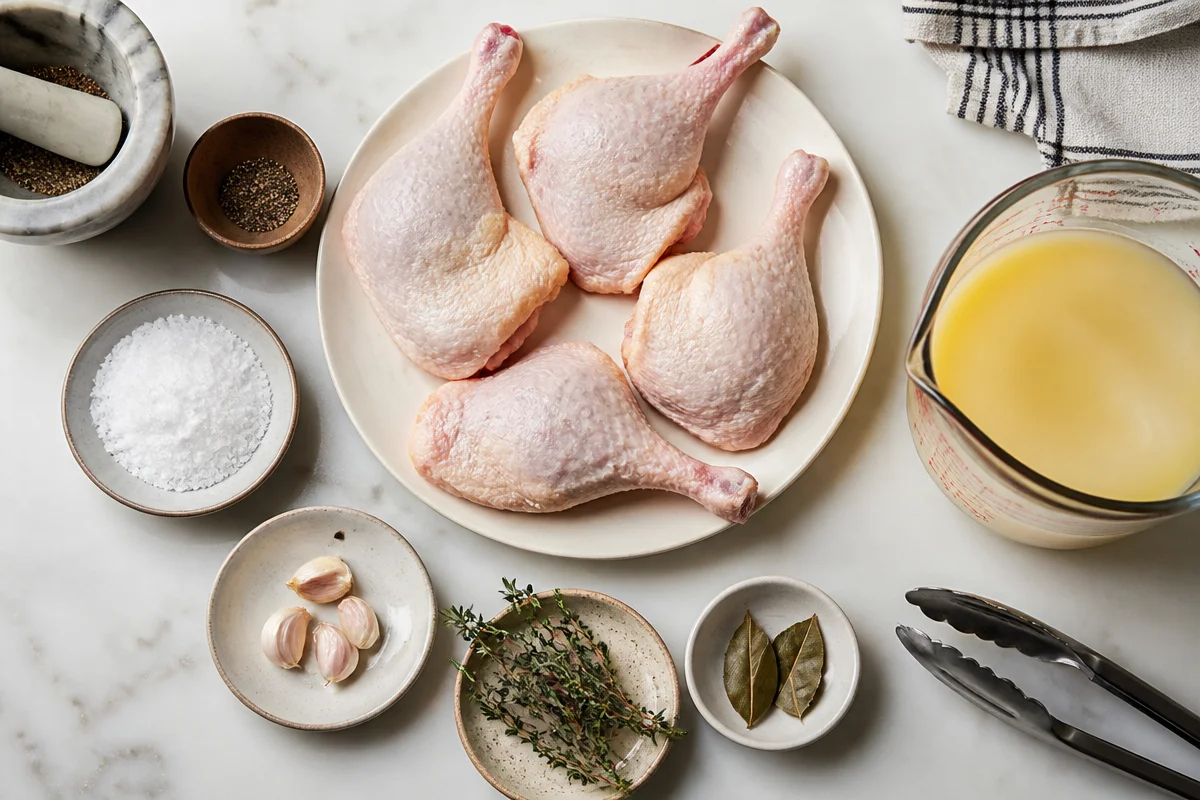
Ingredients you will need
- 4 duck legs (bone in, skin on)
- 2 to 3 tablespoons kosher salt (more if legs are large)
- 4 cloves garlic, lightly smashed
- A few sprigs of thyme
- 1 to 2 bay leaves
- Optional: a pinch of black pepper
- About 3 to 4 cups duck fat (enough to cover in your pot)
Step 1: Salt and chill (the easy “do it now, thank yourself later” step)
Pat the duck legs dry. Rub them all over with kosher salt, and tuck garlic, thyme, and bay around them. Place them in a dish, cover, and refrigerate for at least 12 hours, or up to 24 hours. This helps season the meat deeply and gives you that classic confit texture.
Step 2: Rinse and dry
After chilling, rinse off the excess salt quickly under cool water. Then pat the legs very dry. This is not a “skip it” step. Dry duck means better texture later.
Step 3: Slow cook in duck fat
Heat your oven to 225 F (about 110 C). Place the duck legs snugly in a Dutch oven or oven safe pot. Pour duck fat over them until they are covered, or close to it. Keep the heat low and slow. Cook for about 2.5 to 3.5 hours, until the meat is very tender and you can wiggle the bone easily.
Try not to let it aggressively bubble. You want a gentle, calm cook. If you see lots of bubbling, your oven may be running hot.
Step 4: Store or crisp and serve
At this point, you can eat right away or store it. To store, let everything cool a bit, then transfer the duck legs to a container and cover fully with strained duck fat. Refrigerate. They can last around a couple of weeks when fully covered.
To serve, pull out as many legs as you need and scrape off most of the fat (save it). Place the legs skin side up on a baking sheet. Bake at 425 F for about 15 to 20 minutes until the skin is crisp. You can also crisp in a skillet, but the oven is easier and less splattery.
Serving ideas that keep it simple
I love duck confit with:
- Roasted potatoes cooked in a spoonful of the duck fat
- A simple green salad with a sharp vinaigrette
- Lentils with garlic and herbs
- Warm bread to swipe through the plate juices
If you try it and run into questions, or you want to tell me how it went, you can always reach me here: contact me. I actually read the messages, and I love hearing what people served with it.
Common Questions
1) Can I make duck confit without duck fat?
It will not be true confit, but you can slow cook duck legs in olive oil or another fat in a pinch. The flavor will change a lot, though. Duck fat is what makes this Traditional French Duck Confit Recipe taste classic.
2) How do I know the duck legs are done?
The meat should be very tender, and the leg bone should wiggle easily. If it still feels tight and tough, keep cooking another 20 to 30 minutes and check again.
3) Do I really have to chill the duck overnight?
It helps a ton with seasoning and texture. If you are short on time, do at least 6 hours, but overnight is best for that true Traditional French Duck Confit Recipe feel.
4) What is the best way to reheat duck confit?
Bake it skin side up at 400 to 425 F until hot and crisp. Usually 15 to 20 minutes depending on size. Avoid microwaving if you care about crispy skin.
5) Can I freeze duck confit?
Yes. Freeze the duck legs with fat covering them in a freezer safe container. Thaw in the fridge before crisping and serving.
A cozy final note before you start
If you have been putting off making confit, I hope this nudges you to go for it. Once you do it once, it stops feeling intimidating and starts feeling like a smart little kitchen trick. For extra reading and another approachable take, you can check out Duck Confit (French slow-cooked duck) – RecipeTin Eats and this helpful deep dive from How to Make Classic Duck Confit – Serious Eats. Now grab those duck legs, clear a little fridge space for the overnight salt, and treat yourself to a seriously satisfying Traditional French Duck Confit Recipe at home.
Duck Confit
Ingredients
Method
- Pat the duck legs dry. Rub them all over with kosher salt, adding garlic, thyme, and bay around them. Cover and refrigerate for at least 12 to 24 hours.
- After chilling, rinse off excess salt with cool water, then pat the legs very dry.
- Preheat oven to 225°F (about 110°C). Place the duck legs in a Dutch oven or oven-safe pot, and pour duck fat over them until covered.
- Cook for about 2.5 to 3.5 hours until the meat is very tender and the bone wiggles easily.
- You can serve immediately or store. If storing, let cool, then transfer to a container and cover completely with strained duck fat.
- To serve, preheat oven to 425°F. Place the duck legs on a baking sheet skin side up for 15 to 20 minutes until skin is crisp.