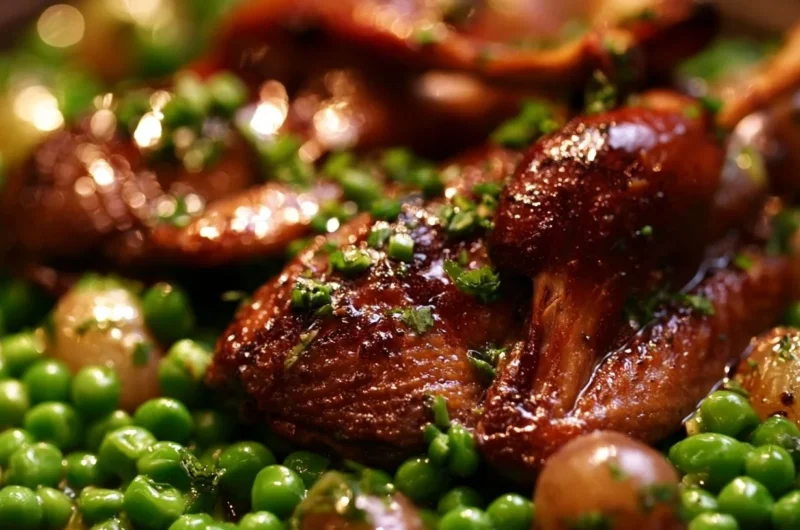
Pigeon aux Petits Pois: A Timeless French Delight
The scent of herbs wafts through the air as the sautéed pigeon hits the hot pan, the skin crackling, signaling the beginning of a culinary revival in my kitchen. It’s a dish steeped in tradition, invoking memories of gatherings around my grandmother’s table, where each bite was a celebration of flavor and familial bonds. As the rich, succulent meat mingles with sweet peas, a harmony of tastes is created that’s both comforting and sophisticated. This is the magic of Pigeon aux Petits Pois, a dish that invites you to share in its storied legacy.
Exploring the world of this remarkable dish not only connects us to French culture but also inspires us to bring a piece of that heritage into our own homes. Whether you are preparing a fancy dinner or looking to impress a loved one, Pigeon aux Petits Pois is an exquisite choice.
Why you’ll love Pigeon aux Petits Pois
- Elevates any dinner party with its elegant presentation and complex flavor profile.
- Incorporates seasonal vegetables, making it a perfect choice for fresh produce lovers.
- Offers a delightful combination of textures, from the tender pigeon meat to the tender sweet peas.
- This recipe embraces classic French culinary techniques while being accessible for home cooks.
Ingredients you’ll need
- 2 pigeons (using whole pigeons gives a more authentic flavor)
- 1 cup green peas (sweet peas are ideal for their natural sugars)
- 1 onion (adds depth to the sauce with its sweetness)
- 2 carrots (for added color and sweetness)
- Fresh herbs (thyme and parsley elevate the dish’s aromatic profile)
- Butter and olive oil (for that rich flavor and crispy skin)
- Salt and pepper (to season)
How to make Pigeon aux Petits Pois
- Begin by preparing the pigeons; clean and pat them dry. Season all over with salt and pepper.
- In a large skillet, heat a mix of butter and olive oil over medium heat. Once shimmering, add the pigeons and sear until golden brown on all sides, about 10-12 minutes.
- Remove the pigeons from the skillet and set them aside. In the same skillet, add diced onions and carrots, cooking until they are soft and fragrant.
- Return the pigeons to the skillet, nestling them among the vegetables. Add a splash of water or stock to the pan to create a steaming effect and enhance flavors.
- Cover the skillet and let cook for 30 minutes, basting occasionally, until the pigeons are cooked through and tender.
- Just before serving, stir in the fresh peas and cook for an additional 5 minutes until they are bright green and heated through.
- Taste and adjust seasoning if necessary, adding more herbs and a bit of acidity if desired.
Tips for the best results
- Allow the pigeons to come to room temperature before cooking for even cooking throughout.
- Use homemade stock for a richer, deeper flavor in the sauce.
- If fresh peas are not available, frozen peas can be a great substitute; just ensure they are thawed before adding them to the dish.
Common mistakes to avoid
- Overcooking the pigeons can lead to dryness; aim for a medium-rare finish for optimal tenderness.
- Forgetting to season the vegetables during cooking can result in bland flavor, so don’t skip that step.
- Not allowing the meat to rest after cooking makes it harder to slice and can dry it out quickly.
Variations
- Consider incorporating pancetta or bacon for a smoky depth of flavor.
- Swap the peas for a seasonal vegetable like asparagus or green beans for a fresh twist.
- Use a splash of white wine to deglaze the pan after browning the pigeons for added acidity and richness.
Storage and reheating
Store leftovers in an airtight container in the refrigerator for up to three days. To reheat, gently warm in a skillet over low heat, adding a touch of broth to prevent drying out. Freezing is possible, but best enjoyed fresh as it retains its flavors and textures best that way.
Frequently asked questions
- Can I use frozen pigeons? Yes, just make sure they are fully thawed and adjust cooking times accordingly.
- Why did mine turn out dry? This could be due to overcooking, so monitor the internal temperature carefully.
- Can I make this ahead of time? Yes, it actually tastes better after resting for a few hours, allowing flavors to meld.
Final thoughts
Bringing Pigeon aux Petits Pois to life in your kitchen transports you to the heart of French culinary tradition, a rich tapestry of flavors and aromatic memories. Just like my grandmother’s kitchen, the warmth of this dish creates a sense of connection — to food, family, and the art of gathering.
Conclusion
Pigeon aux petits pois, with its delicate balance of flavors and textures, is a culinary gem worth exploring. If you’re keen to delve deeper into this classic, Le pigeon aux petits pois offers a wealth of information on its origins, while the delightful take by Maitre Marcel showcases variations worth trying. Embrace the process, and soon enough, you’ll be delighting in the vibrant stories this dish has to tell.