
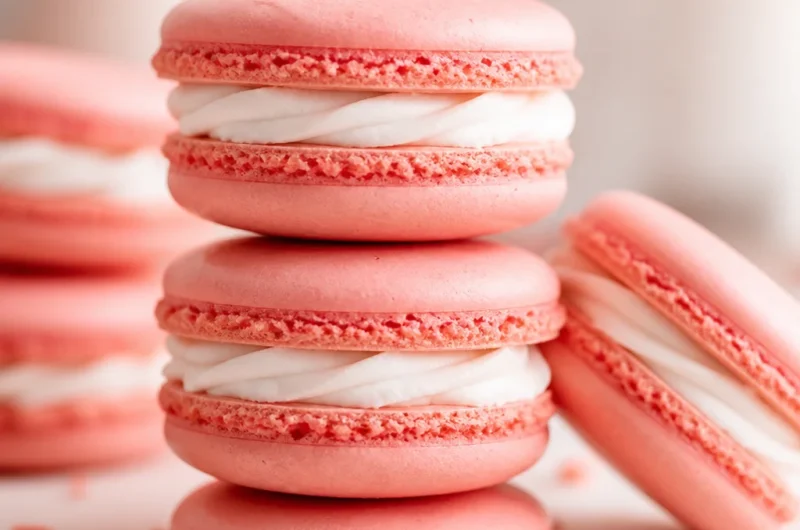
Easy French Macarons Recipe for Beginners is one of those things you google at 11 pm after seeing a cute pastry box on Instagram and thinking, I could totally do that. Then you read a few scary comments about cracked shells and hollow centers and suddenly you are not so sure. I get it. I put off making macarons for ages because they seemed fussy and expensive to mess up. But once I learned a simple rhythm and stopped rushing, they became way more doable. I am going to walk you through it like a friend in the kitchen, with the little tips that actually matter. 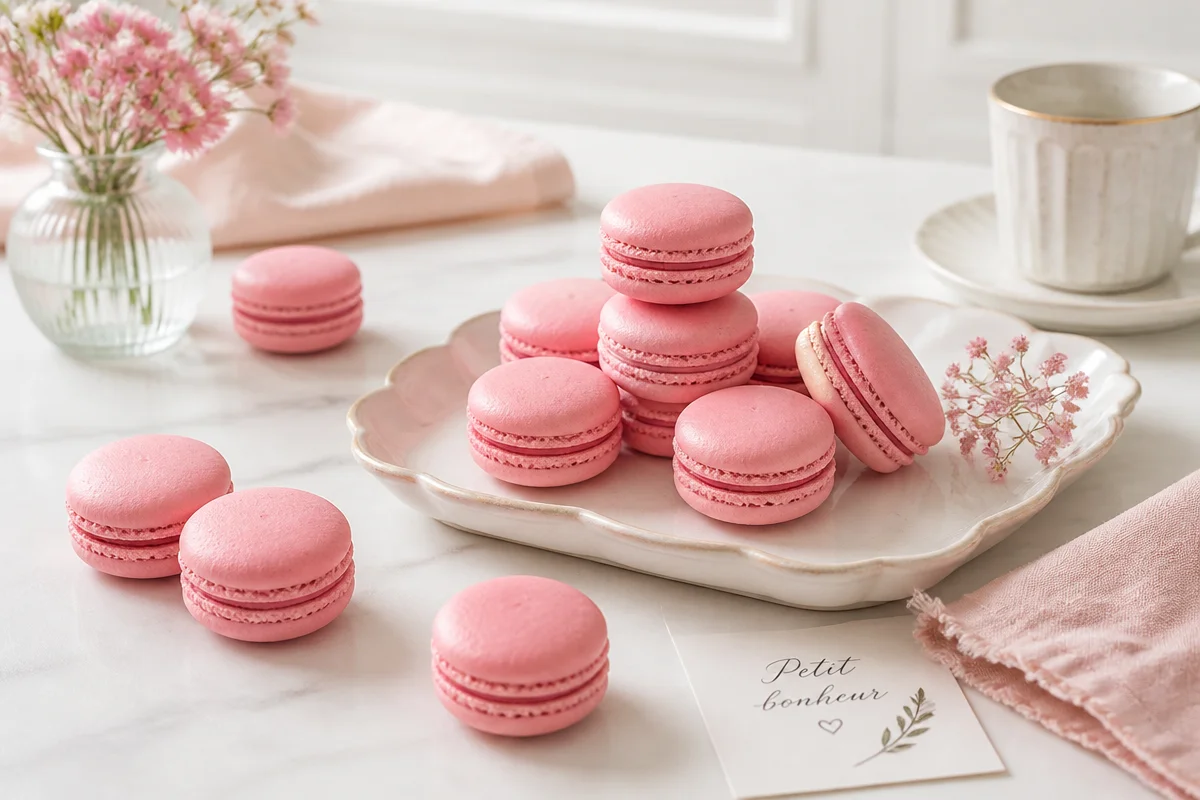
What is a French Macaron?
A French macaron is a small sandwich cookie made with almond flour, powdered sugar, and whipped egg whites. The outside is smooth and lightly crisp, and the inside is soft and a little chewy. The classic look includes the ruffled edge at the bottom called the feet, which sounds funny but is the best sign that you did it right.
Macarons are not the same as coconut macaroons. Different spelling, totally different vibe. A macaron is delicate and light, and the flavor mostly comes from the filling, like buttercream, ganache, or jam.
If you are curious about who is behind this blog and why I am so obsessed with French baking at home, you can peek at my story on my about page. It will make more sense once you see how many batches of these I have made over the years.
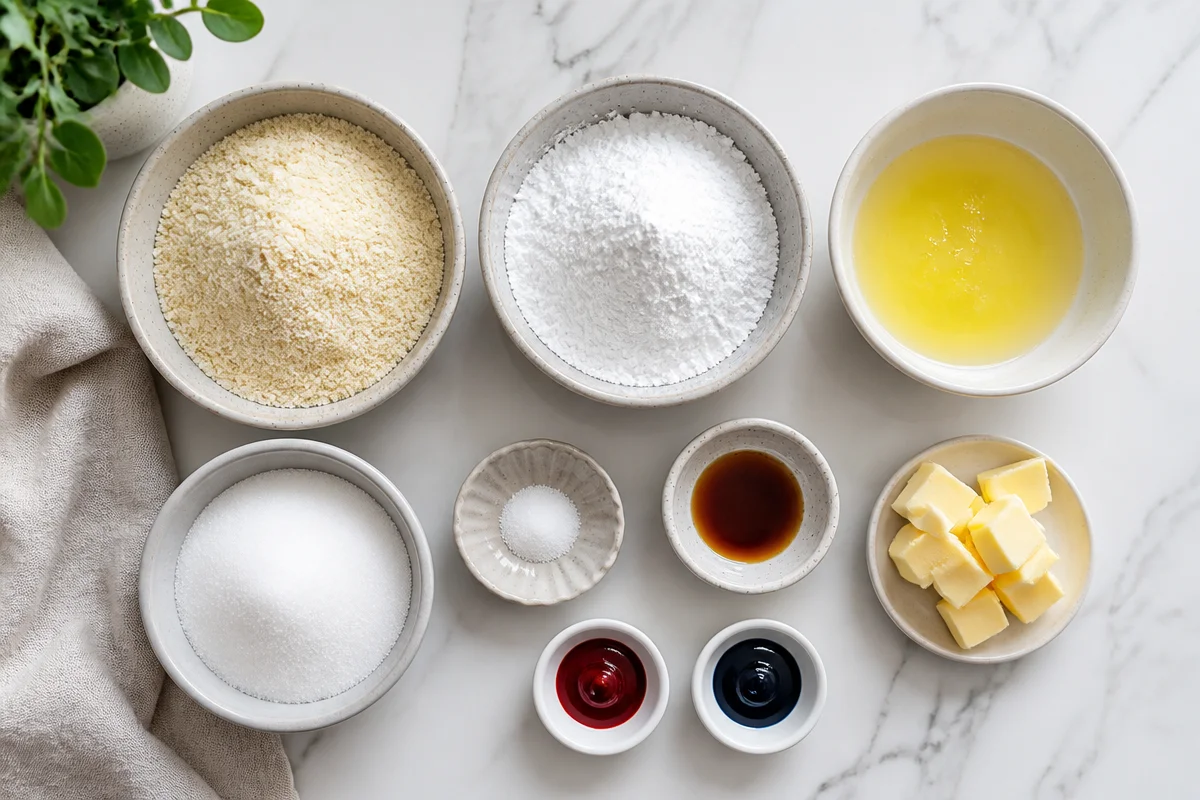
Overview of Ingredients in French Macarons
Let’s keep this simple and beginner friendly. The ingredient list is short, but each one matters. This is not the time to eyeball measurements. Use a kitchen scale if you can.
Macaron shell ingredients
- Almond flour: Use finely ground almond flour, not almond meal. Meal is usually gritty and can cause bumpy tops.
- Powdered sugar: Sweetens and helps create that smooth shell.
- Egg whites: Use fresh eggs, then separate carefully. No yolk sneaking in.
- Granulated sugar: This stabilizes the whipped egg whites.
- Pinch of salt: Optional, but it helps balance sweetness.
- Gel food coloring: Optional. Gel is better than liquid since liquid can mess with the batter.
For a simple filling, you have options. I usually go with a basic vanilla buttercream because it is forgiving and tastes like a bakery treat.
Easy vanilla buttercream filling (quick version): butter, powdered sugar, a splash of milk or cream, vanilla, pinch of salt. You can also do chocolate ganache with chocolate and warm cream if you want something even simpler.
Here is a quick little guide that helps you shop and plan without overthinking it.
Essential Tools for Macarons
You do not need fancy equipment, but a few tools will save you a lot of frustration. If you bake even occasionally, these are worth it.
- Kitchen scale: Macarons are picky about ratios.
- Fine mesh sieve: For sifting almond flour and powdered sugar.
- Stand mixer or hand mixer: You need strong, steady whipping for the egg whites.
- Piping bag and a round tip (like 1A): For neat circles.
- Baking sheets: Flat, sturdy ones bake more evenly.
- Parchment paper or a silicone mat: Either works. Silicone mats can slow browning a bit.
- Oven thermometer: Most ovens lie a little. This helps more than you would think.
If you ever make a batch and want to ask a question about what went wrong, or you just want to tell me you nailed it on your first try, you can always reach me through my contact page. I genuinely love hearing from other home bakers.
Step-By-Step Guide on How to Make French Macarons
This is the part where it all comes together. I am going to explain it in plain language, because when I first learned, every recipe sounded like it was written for pastry school students.
Step 1: Prep your pans and ingredients
Line two baking sheets with parchment. If you want perfect circles, you can draw templates on paper and slide them under the parchment, then remove before baking.
Weigh your ingredients. Separate egg whites into a clean bowl. Any grease in the bowl can mess with whipping. I usually wipe my mixing bowl with a tiny bit of vinegar on a paper towel, then let it air dry.
Step 2: Sift the dry mix
Sift almond flour and powdered sugar together. If you have a few almond bits left in the sieve, do not force them through. Just toss them. This step helps give you smoother tops.
Step 3: Whip the egg whites to stiff peaks
Start mixing egg whites on medium until they look foamy. Add granulated sugar slowly, like a little rain, not one big dump. Keep mixing until the meringue is glossy and holds stiff peaks. When you lift the whisk, the tip should stand up and not droop.
If you are adding gel food coloring, mix it in at the end of whipping. Keep it simple for your first batch. Pastels are easier to work with than super dark colors.
Step 4: Fold to the right batter texture
This part is the whole game. Add the dry mix to the meringue in two or three additions. Fold gently by scraping around the bowl and through the middle.
You are looking for batter that flows like thick lava. If you lift your spatula and let the batter fall, it should form a ribbon that melts back into the bowl in about 10 to 15 seconds. Too thick means it will not settle and you will get peaks. Too runny means it will spread too much and bake flat.
Step 5: Pipe, tap, and rest
Pipe small circles, about 1.5 inches wide. Hold the piping bag straight up for the neatest shape. Once your trays are full, tap them firmly on the counter a few times. This pops air bubbles. You can also pop stubborn bubbles with a toothpick.
Now let the shells rest at room temperature until the tops feel dry to the touch. Usually 30 to 60 minutes, depending on humidity. This rest helps create that smooth top and the feet.
Step 6: Bake and cool completely
Bake at around 300 F to 315 F (150 C to 157 C) for about 14 to 18 minutes, depending on your oven and the size. If your oven runs hot, go lower. If they brown, the oven is too hot or the rack is too high.
Let the shells cool fully before peeling them off the parchment. If you try too soon, they can stick and tear.
Filling and assembling: Match shells by size. Pipe filling on one shell, then gently sandwich with another. Do not press too hard. If you want that classic texture, refrigerate the macarons in a container for 24 hours, then bring to room temp before eating. They get softer and more flavorful after resting.
“I tried this Easy French Macarons Recipe for Beginners and actually got feet on my first batch. I was shocked. Resting the shells and using a scale made all the difference.”
Troubleshooting Common Issues
If macarons have a reputation for being tricky, it is mostly because small details show up fast in the final result. Here are the most common issues and what usually fixes them.
Cracked tops: Usually the shells did not rest long enough, or your oven heat is too high. Let them dry until they do not feel sticky, and consider using an oven thermometer.
No feet: Under whipped meringue, overmixed batter, or not resting. Make sure you reach stiff peaks and let the shells form a skin before baking.
Hollow shells: Often from over whipping egg whites, baking too hot, or underbaking. Try slightly lower heat and make sure the shells are baked through. They should not wiggle when you gently touch the top.
Bumpy tops: Almond flour too coarse or not sifted well. Sift, and do not force chunky bits through. Also, let the piped batter settle after tapping.
Sticking to parchment: Usually underbaked or removed too soon. Cool completely, and if needed, bake 1 to 2 minutes longer next time.
If you are making Easy French Macarons Recipe for Beginners in a humid kitchen, do not panic if resting takes longer. Humidity slows everything down. I have had rainy day batches take over an hour to form that dry top. It is annoying, but it works out.
Common Questions
Do I need to age egg whites overnight?
Not necessarily. Some bakers swear by it, but you can get great results with fresh egg whites. Just separate carefully and avoid any grease in the bowl.
Can I use liquid food coloring?
I would skip it for macarons. Liquid adds extra moisture and can mess with the batter. Gel coloring is safer.
How do I know when the meringue is stiff enough?
Glossy, thick, and it holds a peak that stands up. If it looks dry or clumpy, you went too far.
Why did my macarons spread too much?
Most likely overmixed batter. Stop folding when the batter flows in a ribbon and settles back in about 10 to 15 seconds.
How long do macarons stay fresh?
In the fridge, about 3 to 5 days in an airtight container. You can also freeze them for up to a month. Thaw in the fridge, then bring to room temp before eating.
A sweet little pep talk before you bake
If your first batch is not perfect, you are still doing it right. Easy French Macarons Recipe for Beginners is all about learning what the batter should look like and how your oven behaves. The nice thing is that even imperfect macarons usually taste amazing. If you want extra help and more photos for comparison, I really like this Foolproof Macaron Recipe (Step by Step!) – Broma Bakery guide, and this Beginner’s Guide to French Macarons – Sally’s Baking Addiction is great when you want deeper troubleshooting. Now go make a batch, take a bite, and tell yourself you just baked something that used to intimidate you.
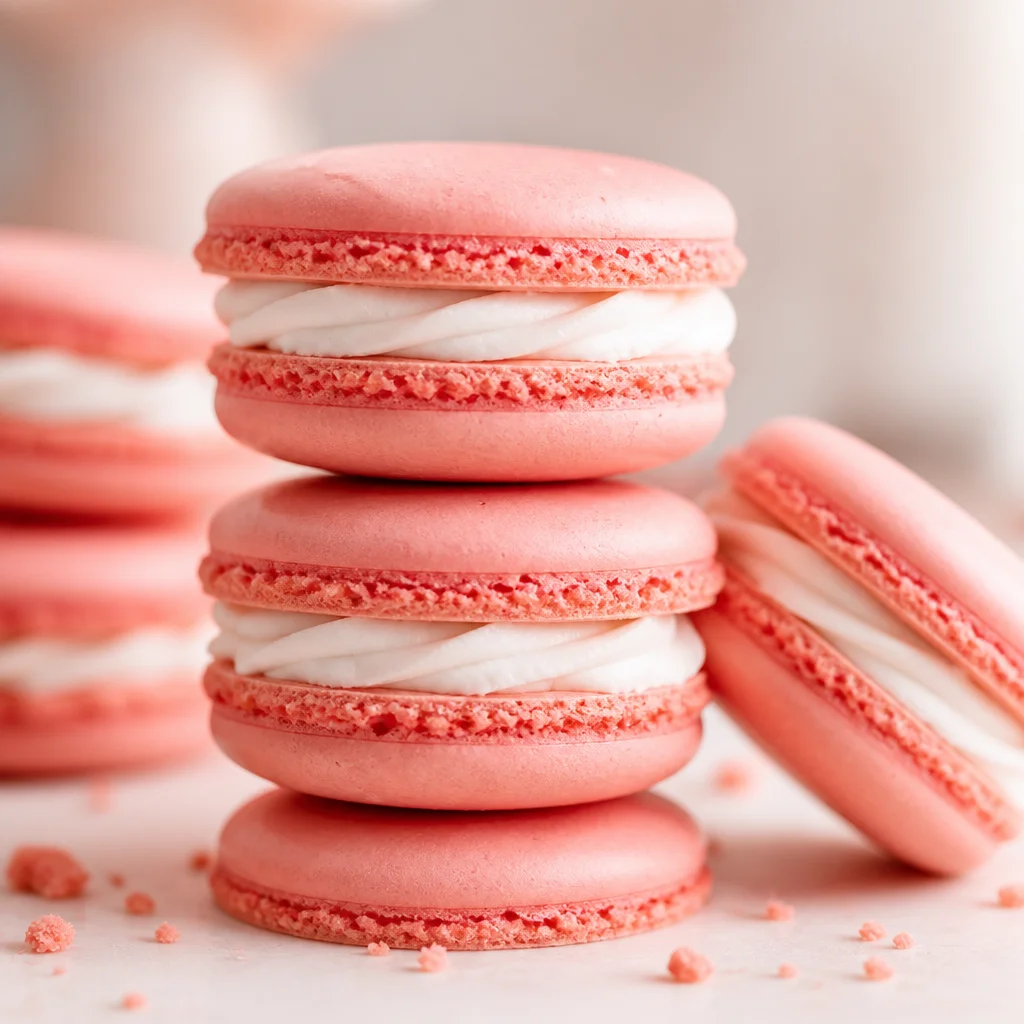
French Macarons
Ingredients
Method
- Line two baking sheets with parchment paper.
- Weigh your ingredients accurately and separate egg whites into a clean bowl.
- Sift almond flour and powdered sugar together to ensure smooth tops.
- Mix egg whites on medium speed, gradually adding granulated sugar until the meringue is glossy and stiff peaks form.
- Add gel food coloring if desired at the end of whipping.
- Gently fold the sifted dry mix into the meringue in two or three additions until the batter flows like thick lava.
- Pipe small circles (about 1.5 inches wide) onto baking sheets and tap firmly to remove air bubbles.
- Allow the piped shells to rest at room temperature until dry to the touch (30 to 60 minutes).
- Bake in a preheated oven at around 300-315°F (150-157°C) for 14 to 18 minutes.
- Cool completely before removing shells from parchment.
- Match shells by size, pipe filling onto one shell and sandwich with another shell.
- Refrigerate macarons for 24 hours before serving for the best flavor.



Pingback: Basic French Macarons – French Recipes